


Roopkund mystery deepens as new DNA clues revealed at BHU
BHU lecture uncovers surprising new clues about Roopkund skeletons. Three groups, a thousand year gap. Read the full report.
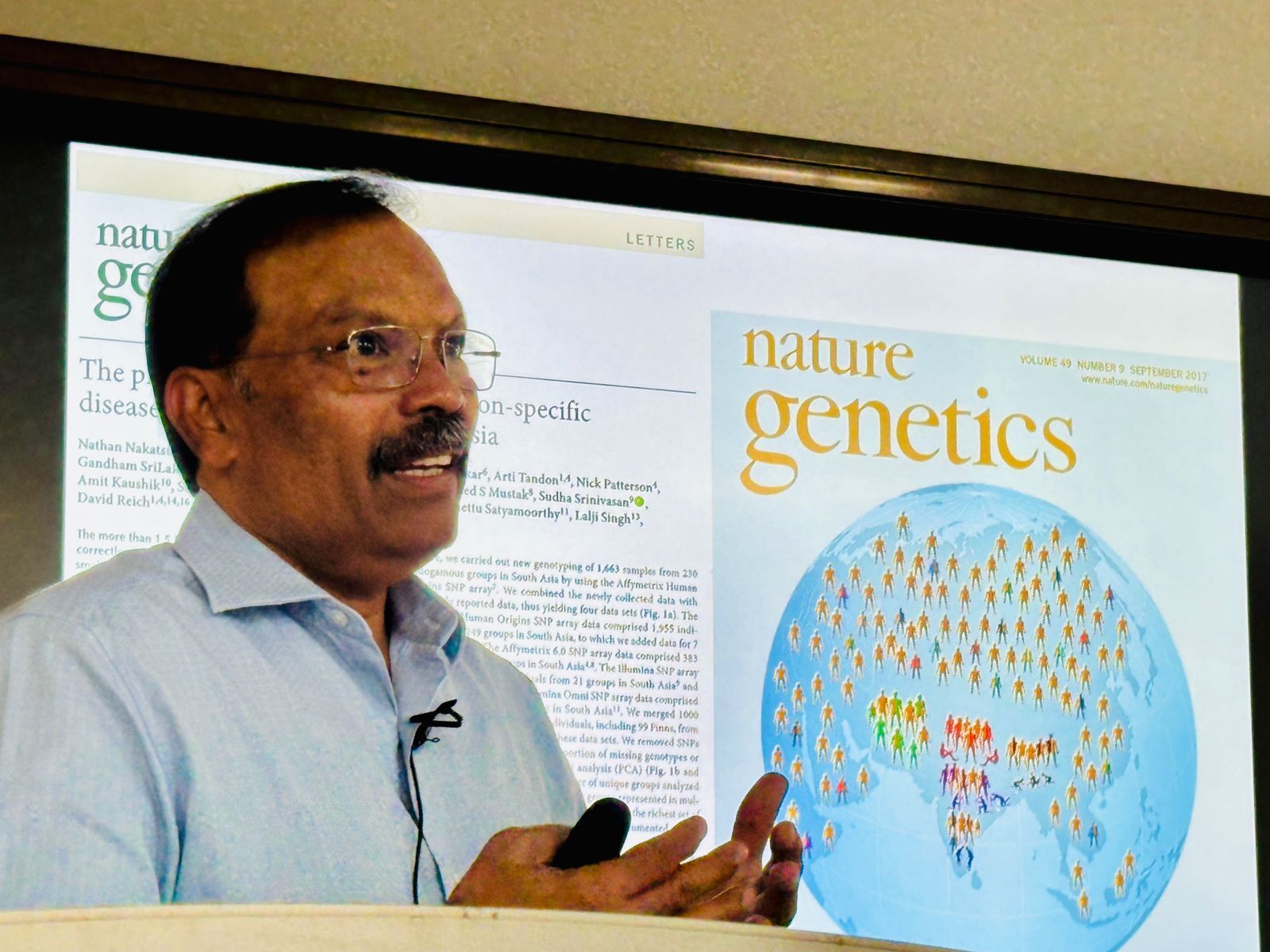
Dr K Thangaraj
Varanasi. In a significant development, two striking chapters of India’s deep past came together on one platform as genetic expert Dr Kumarasamy Thangaraj presented fresh findings on both Roopkund and the ancient Onge tribe at a packed lecture in Banaras Hindu University. The event turned into an unexpected journey that moved from the icy heights of Uttarakhand to the far older trail of human migration from Africa.
According to Dr Thangaraj, the Onge people of Andaman carry one of the oldest genetic footprints outside Africa. He said their ancestors moved out nearly sixty five thousand years ago through a southern coastal route before reaching the Indian subcontinent. He explained that their genetic profile shows minimal influence of Neanderthal DNA, which hints at a direct passage from Africa and confirms that they belong to one of the earliest waves of modern humans to leave the continent.
Dr Thangaraj pointed out that the Onge population has shrunk sharply. He reminded the audience that they were once over six hundred at the start of the twentieth century but only around one hundred and thirty five survive today. He said this fall started during the colonial period when violence, disease and forced contact struck the community. A recent birth raised the current figure to one hundred and thirty six, yet their survival remains fragile in the face of forest loss and modern exposure.
The lecture then shifted to the Himalayas where Roopkund continues to puzzle researchers. Dr Thangaraj said new genomic evidence shows that the skeletons found near the high altitude lake did not belong to a single moment or a single group. His team uncovered at least three separate clusters that arrived nearly a thousand years apart.
The first group belonged to South Asian individuals who lived between the seventh and ninth centuries. They appear to have died in a sudden natural disaster. Dr Thangaraj said many skulls carried round deep injuries believed to be caused by giant hailstones during a violent storm.
The second group, traced to the seventeenth to twentieth centuries, carried ancestry linked to the eastern Mediterranean region around Crete. This has raised fresh questions about long distance movement through the Himalayas at a time when no one imagined such travellers reaching that remote glacier lake. The third case involved a single person with South East Asian roots.
Interestingly, the BHU audience found parallels between the two themes. Both the Roopkund skeletons and the Onge ancestors revealed long forgotten movement patterns that challenge common assumptions about who travelled through South Asia and when.
Faculty members including Professor Singerwell, Professor S C Lakhotia, Professor Rajiv Raman, Professor A K Singh, Professor Parimal Das, Dr Chandana Basu, Dr Richa Arya, Dr Raghav and Dr Geeta attended the session. Coordination came from Professor Gyaneshwar Chaubey and research scholar Debshruti Das.
Students of archaeology, zoology and genomics said the lecture helped them see migration, ancestry and cultural survival through a single scientific lens. The discussion is expected to push new research proposals in both the Andaman region and the Roopkund belt as scholars look for the next set of answers.


